Aeroplan Co-Brand Cards & Digital Growth
Co-brand card growth across three issuers: one customer journey, many partner handoffs.
Redesigning the acquisition journey
+40%
conversion improvement
A redesigned acquisition journey informed by behavioural data, journey analysis, and experimentation.
Selected commercial and implementation details have been generalized.
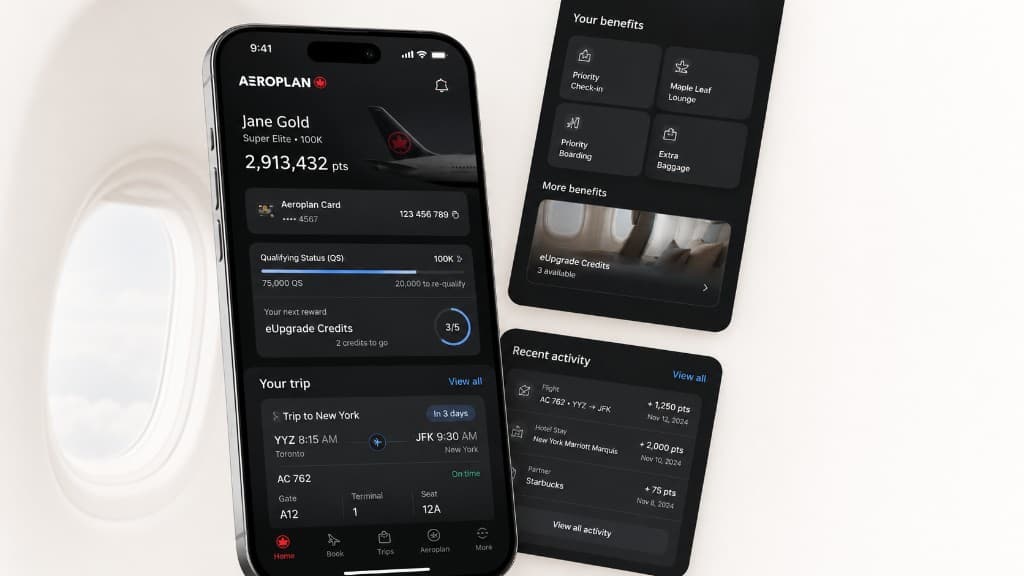
Overview
Aeroplan's co-brand cards sat at the center of loyalty growth, but the product did not end at Aeroplan.com. It continued through TD, CIBC, and American Express application systems, each with different rules and release calendars.
As Product Manager, Growth & Partnerships, I owned digital acquisition across that portfolio. Behavioural analysis, experimentation, and cross-company delivery contributed to a 427% year-over-year increase in digital cardholder acquisition and roughly 40% conversion improvement on key journeys.
Cross-company acquisition ecosystem
Customer journey
Issuer destinations
Supporting capabilities
Aeroplan owned discovery and selection; application completion depended on issuer environments.
The opportunity
Prospective cardholders needed one coherent story: understand the offer, compare products, and hand off to the right issuer without losing context.
Behind the scenes, each partner brought different application technology, compliance constraints, and campaign timing. The product job was to make that fragmentation invisible where the customer could see it, and explicit where teams needed to coordinate.
One portfolio. Multiple customer journeys.
TD
CIBC
American Express
Aeroplan acquisition experience
Customer challenge
- Too many choices
- Difficult comparisons
- Inconsistent information
- Mobile friction
- Disconnected application handoffs
Product objective
Create one coherent discovery and selection experience without removing meaningful differences between issuer products.
My approach
1.Owned the journey, not the page
Acquisition ran from discovery through partner application and into earning. We mapped where customers hesitated (comparison, mobile usability, issuer handoff) instead of optimizing isolated landing pages.
Acquisition was an end-to-end product
Discover
- Customer question
- Why consider an Aeroplan card?
- Product capability
- Value proposition and entry points
- Measurement
- Discovery-to-consideration
- Friction risk
- Low intent or weak relevance
Understand
- Customer question
- What value will I receive?
- Product capability
- Offer and benefit presentation
- Measurement
- Engagement depth
- Friction risk
- Unclear earning or welcome value
Compare
- Customer question
- Which card fits my needs?
- Product capability
- Clear product and benefit comparison
- Measurement
- Comparison-to-selection progression
- Friction risk
- Information overload or unclear differentiation
Select
- Customer question
- Am I choosing the right product?
- Product capability
- Guided selection and eligibility cues
- Measurement
- Selection-to-application intent
- Friction risk
- Mismatched product choice
Apply
- Customer question
- How do I continue?
- Product capability
- Correct issuer routing and journey continuity
- Measurement
- Application-entry progression
- Friction risk
- Loss of context during the partner handoff
Receive decision
- Customer question
- What happens after I apply?
- Product capability
- Expectation setting and next-step clarity
- Measurement
- Post-handoff continuity
- Friction risk
- Abandonment after external transition
Begin earning
- Customer question
- How does the card connect to Aeroplan?
- Product capability
- Loyalty value and earning linkage
- Measurement
- Activation and participation signals
- Friction risk
- Card treated as disconnected from loyalty
- 01
Discover
Why consider an Aeroplan card?
Value proposition and entry points
Discovery-to-consideration
Low intent or weak relevance
- 02
Understand
What value will I receive?
Offer and benefit presentation
Engagement depth
Unclear earning or welcome value
- 03
Compare
Which card fits my needs?
Clear product and benefit comparison
Comparison-to-selection progression
Information overload or unclear differentiation
- 04
Select
Am I choosing the right product?
Guided selection and eligibility cues
Selection-to-application intent
Mismatched product choice
- 05
Apply
How do I continue?
Correct issuer routing and journey continuity
Application-entry progression
Loss of context during the partner handoff
- 06
Receive decision
What happens after I apply?
Expectation setting and next-step clarity
Post-handoff continuity
Abandonment after external transition
- 07
Begin earning
How does the card connect to Aeroplan?
Loyalty value and earning linkage
Activation and participation signals
Card treated as disconnected from loyalty
2.Let behaviour pick the roadmap
Funnel data, abandonment patterns, and experiment results prioritized friction that actually blocked progression.
3.Ran experiments with a hypothesis
A/B tests targeted specific questions (offer clarity, comparison layout, CTA placement), measured against funnel progression, not vanity engagement.
Reducing friction across the acquisition funnel
Before
Traffic → Dense offer page → Unclear comparison → Partner handoff → Drop-off
- Weak information hierarchy
- Too many competing messages
- Unclear product differences
- Mobile usability issues
- Abrupt external transition
Improved experience
Customer intent → Relevant choices → Clear value → Confident selection → Correct issuer journey
- Clearer value proposition
- Improved comparison
- Stronger visual hierarchy
- More deliberate calls to action
- Mobile optimization
- Better journey continuity
40%
Improvement in conversion across key acquisition experiences
The improvement came from coordinated changes across content, structure, routing, mobile usability, partner execution, and measurement, not a single design change.
4.Aligned roadmaps across companies
Requirements, milestones, tracking, and launch criteria were shared with issuers so cross-partner delivery was part of the operating model, not a last-minute scramble.
Partner products require shared value
Member
Needs
- Relevant product choice
- Clear travel and earning value
- Confident application journey
- Consistent experience
Aeroplan
Needs
- Cardholder acquisition
- Member engagement
- Loyalty participation
- Portfolio growth
Financial partner
Needs
- Qualified applicants
- Product visibility
- Campaign performance
- Portfolio economics
Shared product experience
The roadmap had to create customer value while satisfying Aeroplan's growth strategy and each issuer's commercial objectives.
What shipped
Co-brand acquisition platform
Card discovery, comparison, offer presentation, partner routing, and mobile optimization across TD, CIBC, and American Express: one experience architecture, multiple issuer backends.
Funnel redesign
Journey changes focused on helping customers choose confidently and maintain context into the issuer application.
Planning through a major loyalty-platform transition
Supporting contribution
Aimia-operated Aeroplan → Acquisition and transition planning → Air Canada loyalty ecosystem
Supported platform planning associated with Air Canada's approximately $2.4B acquisition of Aeroplan and migration planning for millions of members.
Earlier foundation: partnerships and integrations
Before PM, I worked in Commercial Strategy & Partnerships. That included API and go-to-market requirements for Uber and Starbucks everyday-earning integrations, which became a $1M+ digital channel.
I also supported planning during Air Canada's acquisition of Aeroplan. That commercial context made cross-company product work easier later.
Earlier foundation
From commercial concept to integration requirements
Analyst, Commercial Strategy & Partnerships · 2018–2019
Everyday-earning integration flow
Example partners: Uber, Starbucks
$1M+ digital acquisition and engagement channel enabled
Impact
The growth and conversion outcomes reflect coordinated partner delivery, not a single landing-page redesign.
427%
Year-over-year increase in digital cardholder acquisition
40%
Improvement in conversion across key acquisition journeys
3
Major financial partners across the co-brand portfolio
$1M+
Digital acquisition and engagement channel enabled through everyday-earning integrations
$2.4B
Acquisition supported through commercial and platform planning
Growth
Improved progression from customer interest to issuer application.
Customer clarity
Made a complex multi-issuer portfolio easier to understand and navigate.
Partner execution
Aligned campaigns, requirements, roadmaps, approvals, and launch dependencies across companies.
Platform foundation
Helped translate commercial partnerships into reusable acquisition and integration capabilities.
What I learned
What co-brand growth taught me about product across organizational boundaries:
Product ownership can cross company boundaries
The complete customer journey was distributed between Aeroplan and its financial partners. Owning the product meant influencing systems and decisions outside direct organizational control.
Growth requires more than traffic
Increasing acquisition depended on offer clarity, comparison, mobile usability, routing, handoffs, and measurement, not simply sending more visitors into a confusing journey.
A partner commitment is not yet a customer experience
Commercial requirements needed translation into journeys, interface behaviour, data needs, measurement plans, and launch criteria.
Experimentation works best when tied to friction
The most useful tests began with a behavioural observation and a clear hypothesis, not as a substitute for product strategy.
Integrations extend beyond APIs
Identity, eligibility, earning logic, communication, reporting, fulfilment, and support determine whether a partnership works for members.
Commercial understanding strengthens product judgment
Earlier strategy experience helped negotiate scope, prioritize opportunities, and align customer value with business outcomes.
Continue reading
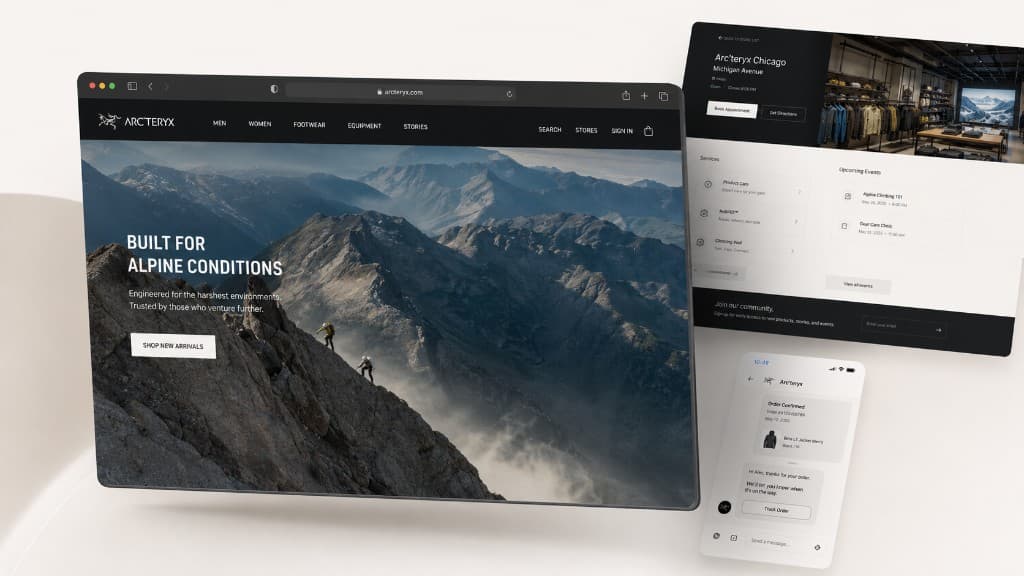
01
Arc'teryx Membership & Customer Engagement Platform
Connecting guest relationships across retail, digital, and service without defaulting to another points program.
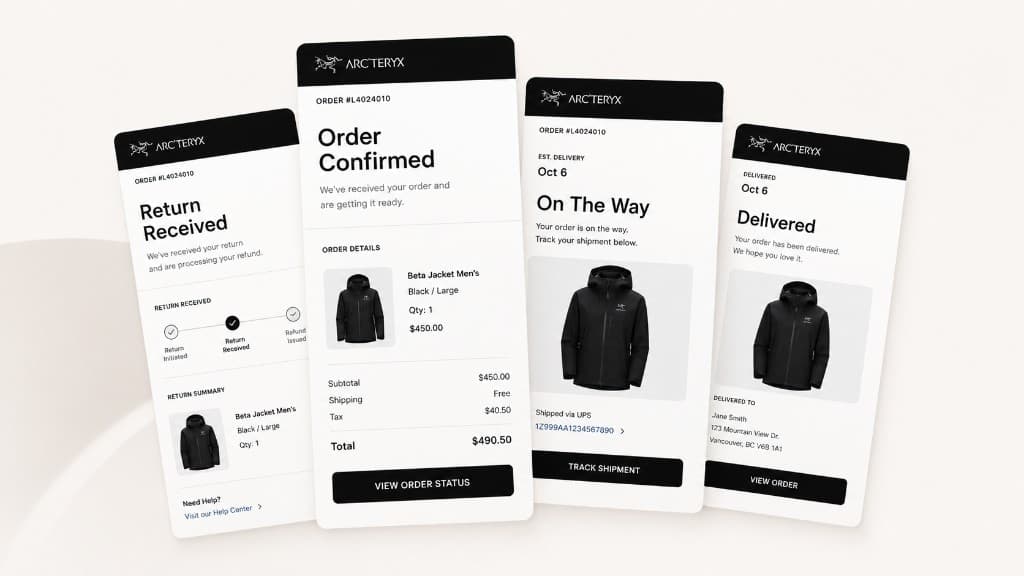
02
Arc'teryx Transactional CRM Infrastructure
When a shipment email fails, customers do not blame the template. They blame the brand.
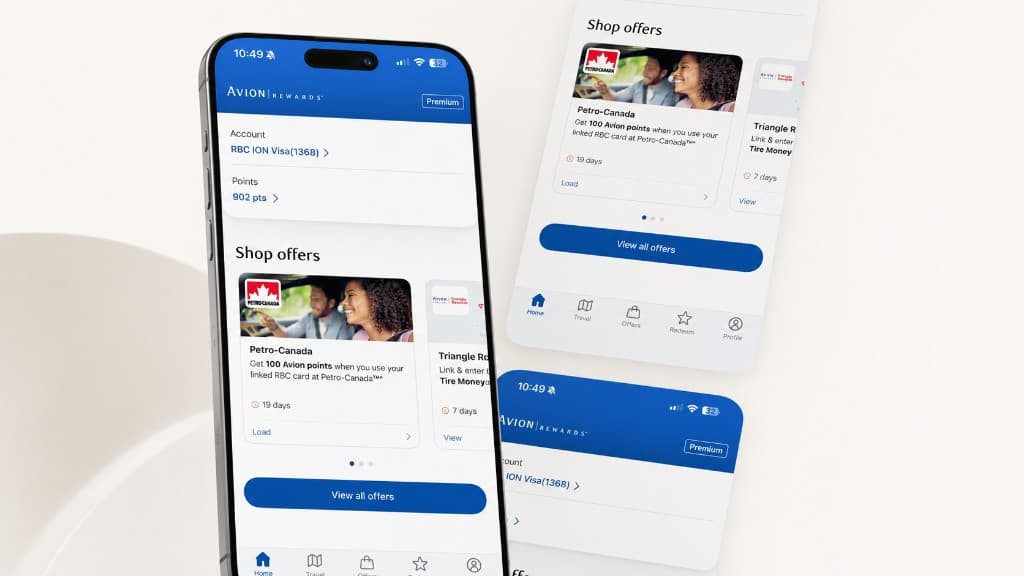
03
RBC Avion Rewards Platform & Payments
Opening Avion to non-bank members meant building money movement customers never had to think about.